
Rejuran vs Exosomes is a comparison that comes up more and more as regenerative skin treatments evolve. Both work at the biological level to improve skin quality, both are injectable, and both require a course of sessions to deliver results. But they do so through fundamentally different mechanisms, and understanding that difference is the key to knowing which suits your skin.
This guide breaks down both treatments clearly so you can walk into your consultation well informed. At Dr Tass Cosmetic & Skin Clinics in Melbourne, we offer both as part of our regenerative skin treatment programme, and our practitioners will help you determine which approach fits your skin and your goals.
Key Takeaways
- Rejuran uses polynucleotides (PDRN) derived from salmon DNA to activate the skin’s own repair mechanisms at a cellular level, improving texture, hydration, and elasticity over time.
- Exosome therapy uses nano-sized vesicles packed with growth factors, proteins, and signalling molecules to trigger a broad skin regeneration response.
- Rejuran delivers its results gradually and consistently, with a course of three to four sessions at four-week intervals. Exosome therapy can produce faster initial changes, though a course is still needed for full results.
- Both suit those wanting meaningful improvement in skin quality, not structural change. The right choice depends on your specific concerns, skin condition, and goals.
- Dr Tass also offers Skinvive and Revive within the regenerative range for patients where those options are a stronger match.
What Is Rejuran?
Rejuran is a polynucleotide-based injectable treatment containing PDRN (polydeoxyribonucleotide), a chain of DNA fragments derived from salmon. When injected into the skin, PDRN activates the skin’s own repair mechanisms at the cellular level, promoting cell regeneration, improving hydration, and gradually restoring elasticity. A study confirms that polynucleotide treatments support skin repair, hydration, and collagen production in ageing skin.
At Dr Tass, the Rejuran treatment is available across our Melbourne skin clinics. It addresses concerns including fine lines, skin laxity, enlarged pores, uneven texture, and loss of skin vitality. Results are gradual and cumulative. Most patients see meaningful improvement after a full course of three to four sessions, each spaced four weeks apart.
What Makes Rejuran Different from Other Injectables?
Unlike dermal fillers, which add volume, or anti-wrinkle injections, which relax muscles, Rejuran works at the biological level to support the skin’s natural repair process. It does not change facial structure. Instead, it improves the quality of the skin from within. This makes it particularly well suited to those who want healthier, more resilient skin rather than a structural change.
What Is Exosome Therapy for Skin?
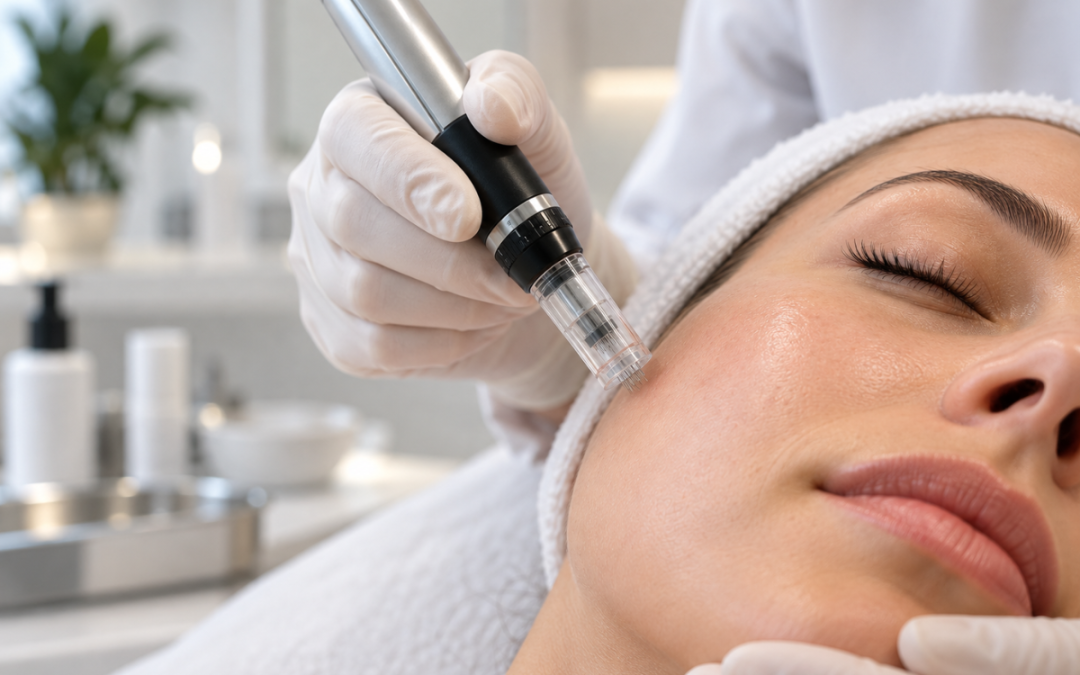
Exosome therapy uses nano-sized vesicles called exosomes, which cells release naturally as part of the body’s communication and repair network. In a clinical setting, highly concentrated exosome preparations are injected into the skin. They deliver a potent mix of growth factors, proteins, and signalling molecules that trigger regeneration. A study supports exosome-based treatments as a promising regenerative approach, with emerging evidence for skin repair, collagen stimulation, and anti-ageing applications.
At Dr Tass, the exosome therapy treatment targets skin concerns including fine lines, dullness, uneven tone, and skin that has lost its regenerative capacity through age or environmental damage. Because exosomes carry a wide range of signalling molecules, they can prompt a broader biological response than treatments that target a single pathway.
How Are Exosomes Different from Other Regenerative Treatments?
Where Rejuran uses polynucleotides to activate the skin’s own repair DNA, exosomes act as messengers that carry instructions directly to skin cells. They do not add a substance the body needs to process. Instead, they communicate with existing cells and prompt them to regenerate more actively. This is a newer mechanism of action, and the clinical evidence base is growing rapidly.
Rejuran vs Exosomes: The Key Differences
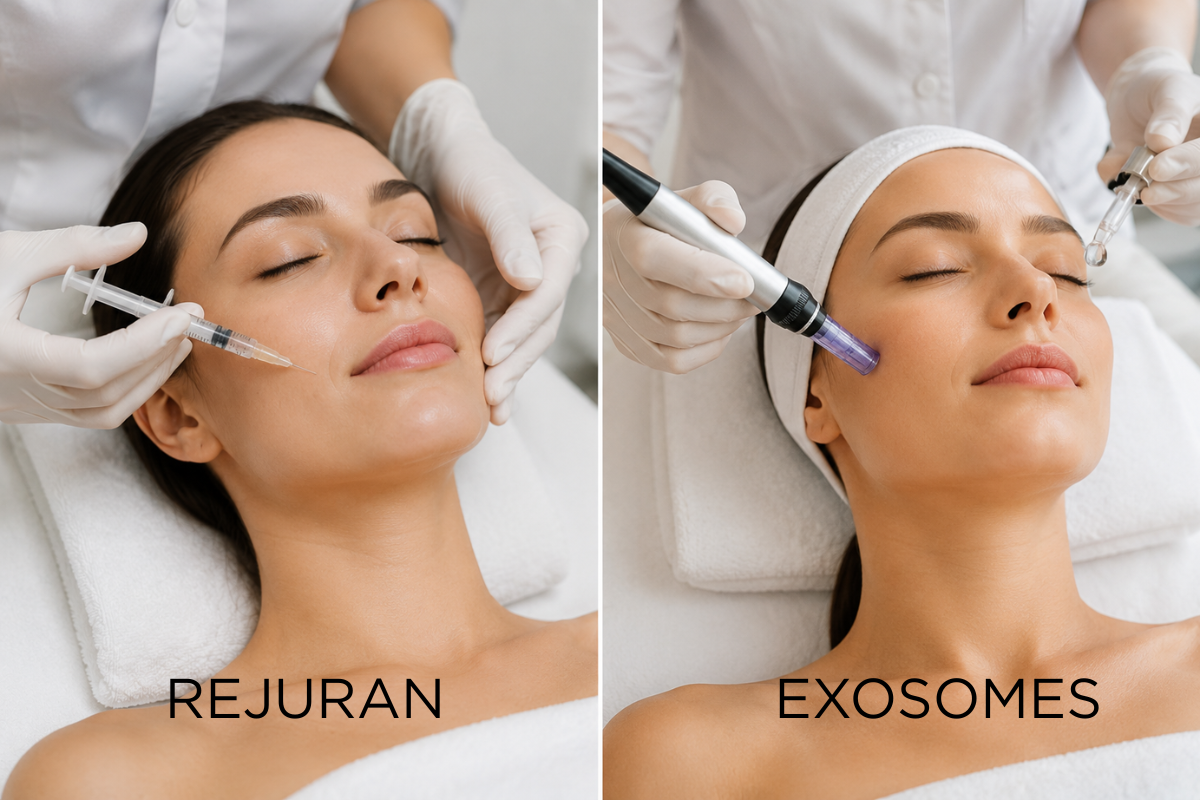
When comparing Rejuran vs Exosomes, the most useful distinction to understand is how each one interacts with the skin. Both work at the biological level, but through different routes. Rejuran provides the raw material for cellular repair. Exosomes provide the signals that tell cells to repair themselves.
Mechanism of Action
Rejuran’s active ingredient, PDRN, integrates into the skin’s cellular environment and directly supports DNA repair, collagen synthesis, and tissue regeneration. Exosomes act as cell-to-cell messengers. They deliver packages of biological information that prompt skin cells to upregulate their own repair and regeneration activity. Both approaches drive regeneration, but the starting point is different.
What Each Treats Best
Rejuran excels at steady, reliable skin quality improvement: fine lines, crepey texture, enlarged pores, dullness, and loss of skin resilience. It suits those with early or moderate ageing changes who want gradual, well-established results. Exosome therapy tends to suit those with more significant skin fatigue, chronic dullness, or accelerated ageing, where a broader biological reset is the goal. Its wider range of signalling molecules may also benefit those who have not responded well to more targeted treatments.
Session Structure and Timeline
Rejuran requires a structured course of three to four sessions at four-week intervals. Results build progressively and continue to develop for several months after the final session. Exosome therapy also requires a course, though session structure varies depending on the protocol and the patient’s starting point. Your practitioner will outline the recommended course for your skin at consultation. Neither treatment delivers meaningful results from a single session.
Evidence Base
Rejuran has a well-established clinical track record, particularly from South Korean dermatology, where polynucleotide treatments have been in regular use for over a decade. Exosome therapy is supported by a growing body of research and is at an exciting point in its clinical development. Both are used in evidence-informed practice. Your practitioner can discuss the research base for each in the context of your skin.
Downtime and Comfort
Both treatments are injectable and involve some temporary redness, minor swelling, and occasional bruising at the injection sites. There is no significant downtime with either. Your skin may look slightly flushed for a day or two after treatment. Your practitioner applies topical numbing cream before treatment to minimise discomfort.
How Do I Choose Between Rejuran and Exosomes?
The most honest answer is that the right choice comes from a proper skin assessment, not a comparison guide. That said, the following framework helps you think through which direction is likely the better fit.
Rejuran may suit you if:
- Your primary concern is gradual, reliable skin quality improvement: fine lines, texture, pore size, or dullness.
- You prefer a treatment with a long-standing clinical track record in polynucleotide-based skin repair.
- You want a consistent, well-characterised product with a predictable mechanism of action.
- You are in the early to moderate stages of skin ageing and want steady, cumulative improvement.
Exosome therapy may suit you if:
- Your skin shows significant fatigue, chronic dullness, or accelerated ageing that has not responded well to other treatments.
- You want a broader biological reset that works through multiple regenerative pathways simultaneously.
- You are open to a newer treatment category with a rapidly growing evidence base.
- Your practitioner assesses that a wider-range signalling approach is the more appropriate starting point for your skin condition.
Can You Have Both?
Yes. Rejuran and Exosome therapy are not mutually exclusive. Some patients benefit from combining them as part of a broader skin rejuvenation plan, where each treatment addresses different aspects of the skin’s regenerative needs. Your practitioner can advise whether a combined or sequential approach makes sense for your skin at consultation.
What About Other Options in the Regenerative Range?
Rejuran and Exosomes sit within a broader regenerative treatment programme at Dr Tass. Depending on your skin concerns and goals, Skinvive or Revive may be a stronger match for your skin profile. Skin booster treatments are also available for those prioritising hydration and surface quality. A full skin assessment is the most reliable way to find the right approach for you.
Book a Regenerative Skin Consultation at Dr Tass Melbourne
Whether Rejuran, Exosome therapy, or another treatment within our regenerative range is the right fit for your skin, the first step is a consultation. Our practitioners at Dr Tass will assess your skin, explain the options clearly, and provide a personalised plan and pricing before you commit. Book at Crown Spa Melbourne, Port Melbourne, or Ripponlea.