
Ulthera vs Thermage is one of the most common comparisons patients raise when exploring non-surgical skin tightening. Both treatments aim to produce firmer, lifted skin without surgery or downtime. But they arrive there through completely different means, and that difference is what makes the comparison genuinely useful. The right choice depends less on which treatment is “better” and more on what your skin needs and how it responds.
At Dr Tass Cosmetic & Skin Clinics in Melbourne, both treatments are available as part of our skin tightening programme. This guide breaks down how each works, where each performs strongest, and the questions that help you decide which is the better fit for your situation.
Key Takeaways
- Thermage uses monopolar radiofrequency to heat and remodel the deep collagen layer. It works in a single session and suits those beginning to notice laxity who want no downtime and no course of treatments.
- Ulthera uses micro-focused ultrasound to deliver energy at the foundational structural layer of the face, the same plane addressed in surgical lifting. It is the only TGA-approved non-invasive treatment to target this depth.
- Both deliver results that develop over months rather than immediately, and both last around twelve to eighteen months. Neither replaces surgery for significant descent.
- The right choice depends on where your laxity is, how much, and what outcome you are trying to achieve. In some cases, a combination of both is the most effective approach.
What Is Thermage?
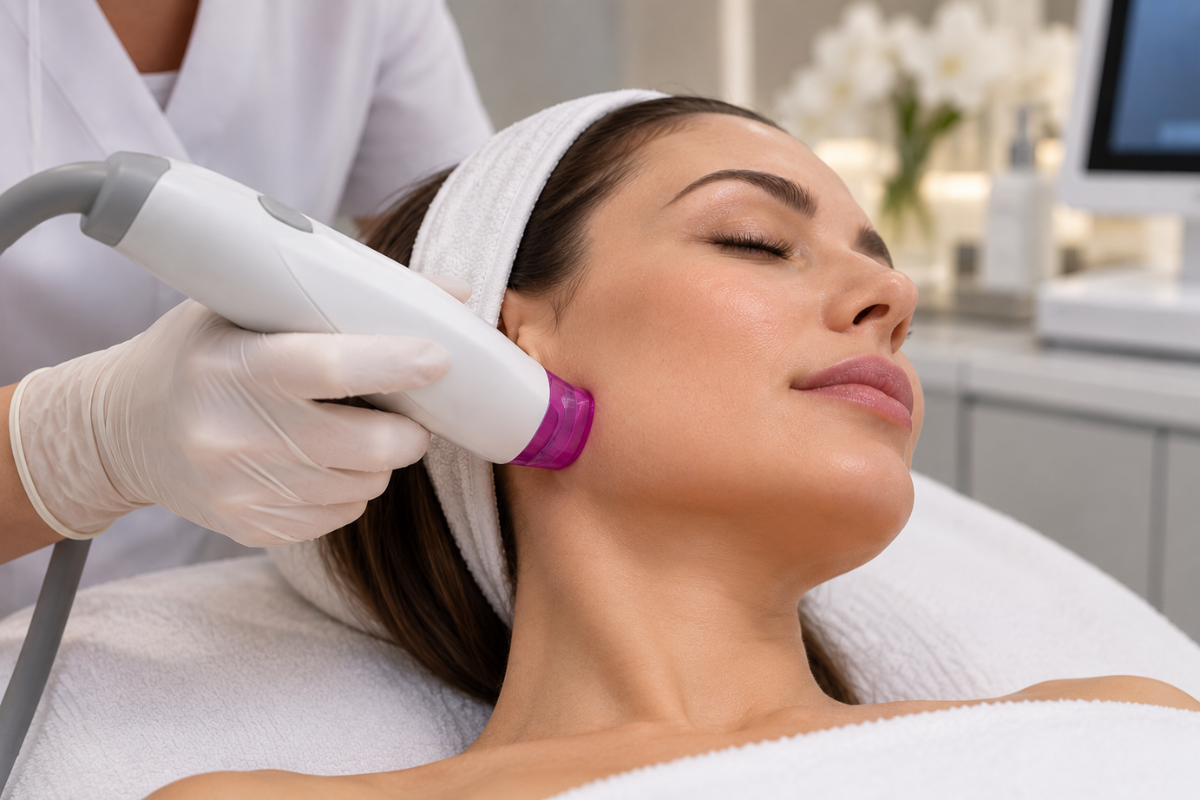
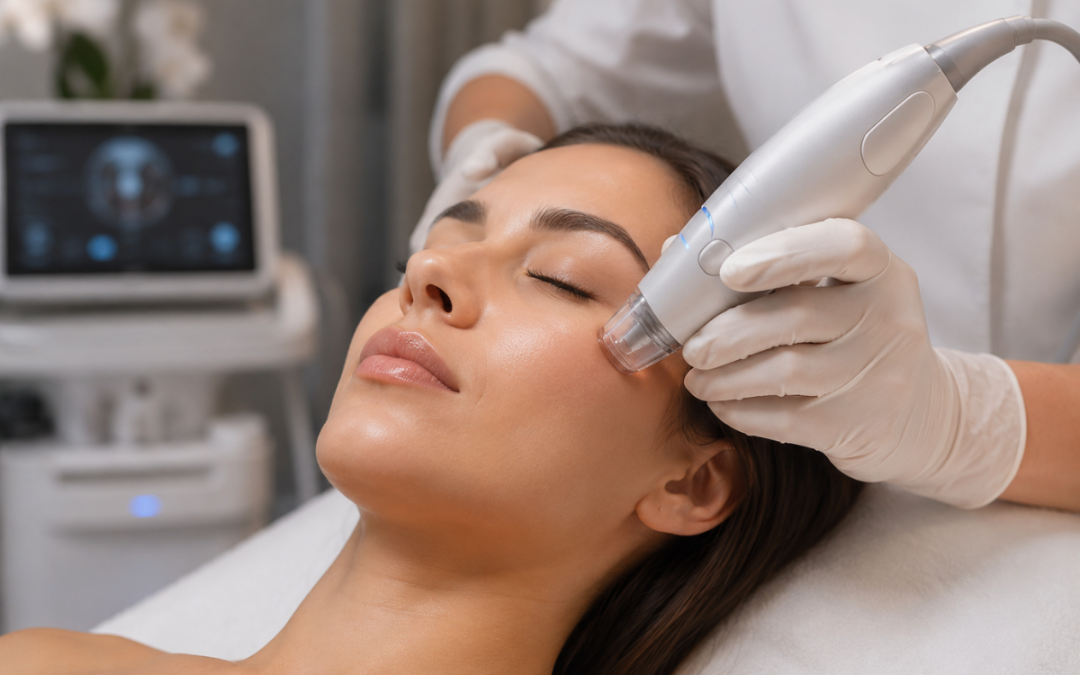
Thermage uses monopolar radiofrequency energy to heat the deep, collagen-rich layer of the skin. Unlike surface treatments, the energy bypasses the outer layers and concentrates heat where structural change happens: in the dermis and subdermal tissue.
This does two things. First, it contracts the existing collagen immediately, which is why you see some improvement on the day. Second, it sets off a longer-term remodelling process in which the body produces new collagen to replace the old. Research published confirms radiofrequency skin tightening as an effective non-surgical option, with outcomes closely related to correct device settings and technique.
What makes Thermage distinctive is its protocol. One session completes the full treatment. You do not need a course, and there are no return visits before results begin. What you see on the day is roughly ten per cent of what is coming. The real change develops gradually over two to six months as collagen remodels, and results typically last twelve to eighteen months. Most patients choose to repeat annually to maintain and build on what they have achieved.
What Does Thermage Treat Best?
Thermage is particularly effective for skin that has begun to soften and loosen without significant descent. The jawline and chin are the most common areas, but it also works on the face, eyelids, neck, hands, and body.
For someone who notices that their skin sits differently than it used to, or that facial definition is starting to blur, Thermage addresses that change at its source. Because it works at the collagen level rather than the surface, it improves the quality and behaviour of the skin itself.
Who Suits Thermage?
Thermage suits patients who are typically in their mid-thirties to mid-fifties, noticing early to moderate laxity. If you want a single-session treatment that fits into a busy schedule with no recovery period, it is a natural fit.
You can apply makeup immediately after and return to work the same day. For those who want a reliable, well-established collagen-remodelling treatment without committing to a course, Thermage is a strong option.
What Is Ulthera?
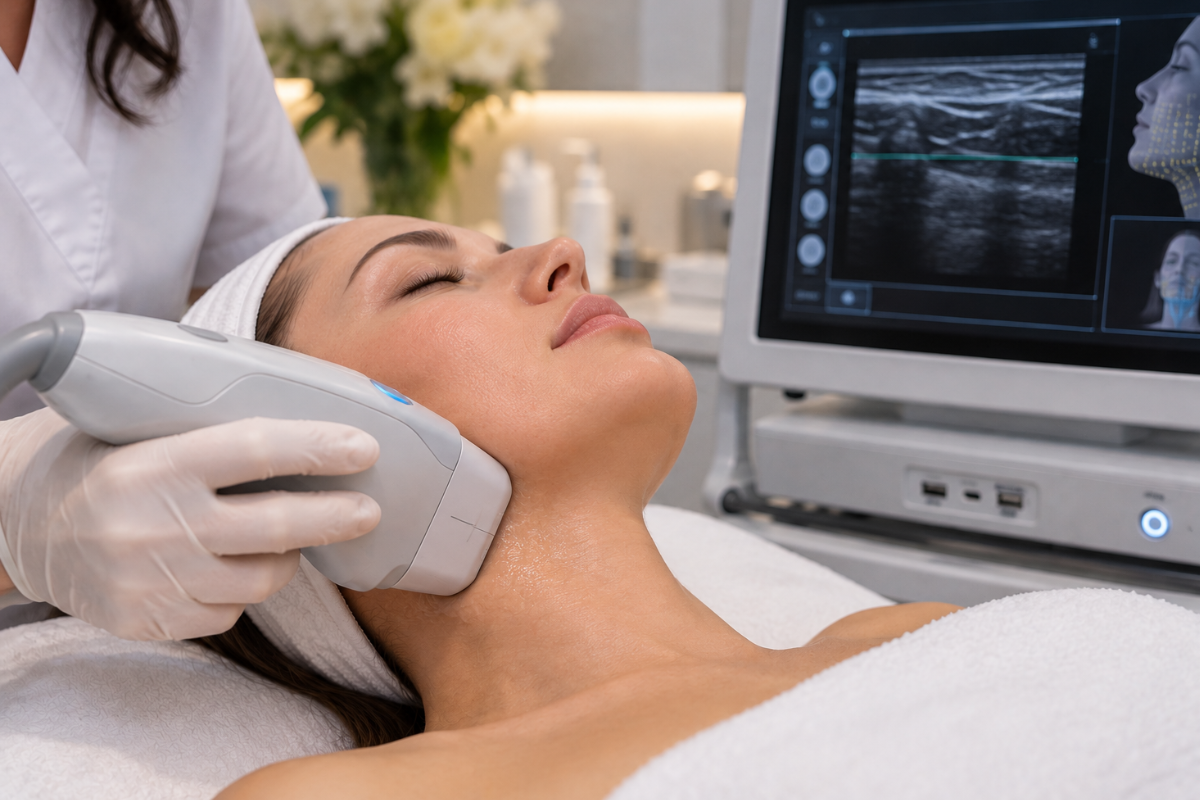
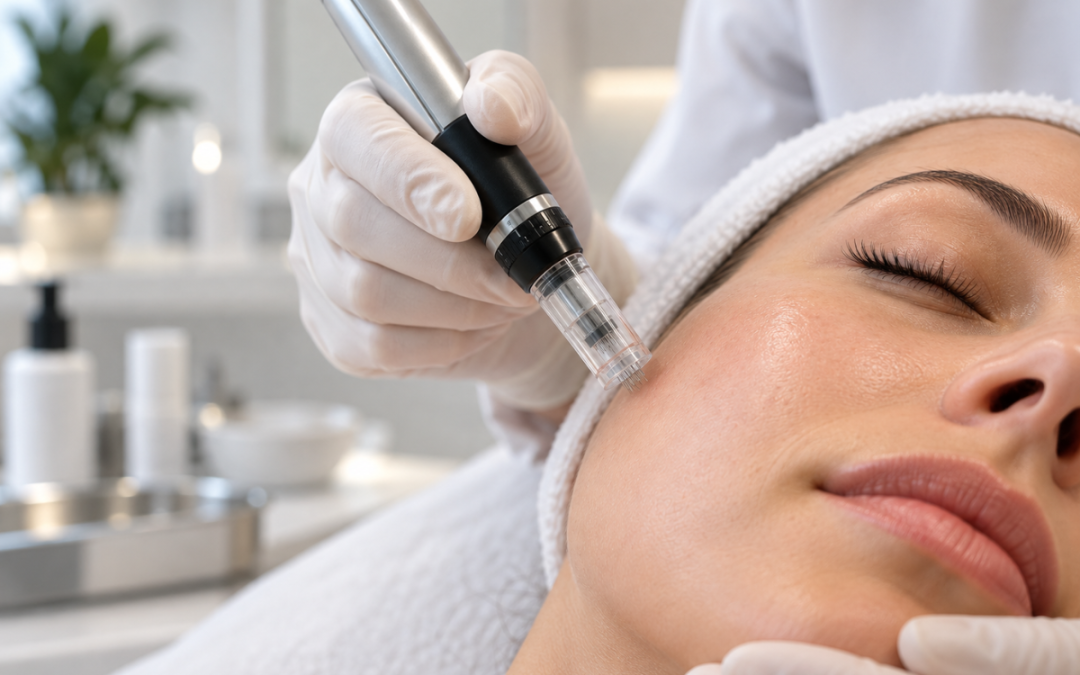
Ulthera uses micro-focused ultrasound to deliver energy at precise depths within the skin and underlying tissue. What sets it apart is where it reaches. The deepest setting targets the superficial musculoaponeurotic system, or SMAS layer, the same structural plane that surgeons address in a face lift. This is not a marketing claim. Ulthera is the only non-invasive treatment with TGA approval to target the SMAS, and the clinical evidence for micro-focused ultrasound skin lifting is well-established across peer-reviewed literature.
The other element that distinguishes Ulthera is its imaging capability. The device includes real-time ultrasound visualisation. The practitioner can see the tissue layers on screen during treatment and confirm that energy reaches exactly the right depth before each pulse. This precision matters. Treating the SMAS layer is only valuable if the energy actually reaches it, and imaging makes that verifiable rather than approximate.
What Does Ulthera Treat Best?
Ulthera is best suited to the brow, under the chin, the neck, and the upper chest. The brow lift is one of its most sought-after applications, as non-surgical brow lifting options are genuinely limited.
The neck is another strong indication: the submandibular tissue responds well to SMAS-level energy. For patients who feel their neck has aged ahead of the rest of their face, the result can be meaningful. Fine lines on the upper chest also respond to the shallower settings.
Who Suits Ulthera?
Ulthera suits patients with mild to moderate laxity of the brow, chin, and neck who want the deepest possible non-surgical lift available. Because it operates at the foundational layer, the results tend to feel more structural.
Patients who feel that surface treatments have not addressed what they are seeing, or who have been told they are not yet ready for surgery, often respond well to Ulthera. The treatment requires no downtime. Results develop over three to six months and typically last twelve to eighteen months.
Ulthera vs Thermage: How They Compare
The comparison comes down to mechanism, depth, and what your skin specifically needs. Both treatments address skin laxity without surgery, and both deliver results that unfold over months rather than days. Beyond that, the differences are worth understanding carefully.
Technology and Depth
Thermage heats the deep dermis using radiofrequency. The energy spreads through the tissue and warms the collagen layer broadly, which is why it covers large areas effectively and suits the full face and body.
Ulthera delivers point-focused ultrasound energy to defined depths: 4.5mm for the SMAS layer, 3mm for the deep dermis, and 1.5mm for the superficial dermis. Each depth targets a different tissue layer. Where Thermage works broadly through the skin’s own collagen, Ulthera works structurally at the level of the tissue that holds the face up.
Session Structure and Downtime
Thermage is a single-session treatment. You come in once, stay for ninety minutes to two and a half hours depending on the area, and the process is complete. Most patients have no visible recovery at all.
Ulthera can also be delivered in a single session, though some areas suit a series of two or three shorter treatments. Both require no downtime, and you can return to normal activity the same day.
Comfort During Treatment
Thermage is generally described as warm to occasionally uncomfortable, with the intensity varying by area. The device uses a cooling mechanism to protect the surface while heating the deeper layers.
Ulthera involves short, precise pulses that most patients describe as a deep heat sensation, sometimes with a brief ache as the energy reaches the SMAS layer. Both treatments are manageable. Pain tolerance and individual sensitivity vary, and your practitioner will adjust accordingly.
Results Timeline and Longevity
With Thermage, the initial contraction is visible on the day, but the meaningful result arrives over two to six months as new collagen forms. With Ulthera, very little is visible immediately, and the result develops over three to six months.
Both typically last twelve to eighteen months. Treating before you have fully lost the previous result is what makes the improvement compound rather than simply reset. Waiting until you are back to baseline before rebooking works against you.
Areas of Treatment
Thermage is the more versatile treatment in terms of coverage. It works on the face, eyelids, neck, hands, and body areas including the abdomen. Ulthera is focused primarily on the face, neck, and chest. For patients wanting to address both the face and another body area in the same visit, Thermage is the practical option.
Which Treatment Is Right for You?
There is no universal answer to this. Both Thermage and Ulthera are well-established non-surgical skin tightening treatments with genuine evidence behind them. The question is which fits your anatomy, your concerns, and your expectations.
Thermage may be the better fit if:
- Your primary concern is the jawline, cheeks, or overall facial skin quality, rather than a specific lifting effect.
- You want a single-session treatment with no requirement to book a course.
- You want to treat the face and another body area, such as the neck or hands, in the same visit.
- You are in the earlier stages of laxity and want to invest in collagen quality before more significant change occurs.
Ulthera may be the better fit if:
- Your concern is specific lifting: the brow, the chin, the neck, or the line between face and neck.
- You want the deepest possible non-surgical intervention available, targeting the same structural layer as a surgical lift.
- Surface or dermal-level treatments have not addressed what you are seeing, and you want to go deeper.
- You are looking for a non-surgical option that has TGA approval for its depth of action and a robust clinical evidence base.
Can Thermage and Ulthera Be Combined?
Yes. For some patients, combining the two is more effective than either alone. Ulthera can address the structural SMAS layer while Thermage remodels the dermal collagen above it, creating a result that works at multiple depths simultaneously.
Whether a combined approach is appropriate depends on your anatomy, your starting point, and your goals. Your practitioner will discuss this at consultation.
What If Neither Treatment Is Quite Right?
Skin tightening is not a one-size-fits-all conversation. Depending on the nature and degree of your laxity, other treatments may be more appropriate. PDO thread lifts physically reposition tissue that has descended, which puts them in a different category from energy devices entirely.
For those at an earlier stage, a course of Clear + Brilliant addresses surface quality and keeps skin in good condition between more intensive treatments. At consultation, your practitioner will assess your skin honestly and recommend the most appropriate path, whether that is Thermage, Ulthera, something else, or a combination.
Ulthera and Thermage at Dr Tass Melbourne
At Dr Tass Cosmetic & Skin Clinics, both Thermage and Ulthera treatments are available across our clinics. Every skin tightening consultation begins with a thorough assessment of your degree of laxity and the specific areas you want to address.
We cover your medical history, your goals, and what each treatment can realistically achieve for your skin. We do not recommend a treatment because it is popular. We recommend what the assessment indicates will actually work for you.
Alongside Thermage and Ulthera, we offer a range of complementary skin treatments that can be sequenced as part of a longer-term plan. What combination, if any, is appropriate for your skin will be discussed clearly and honestly before you decide anything.
Melbourne Clinic Locations
Thermage and Ulthera skin tightening consultations and treatments are available at Crown Spa Melbourne, Port Melbourne, and Ripponlea.
Book a Skin Tightening Consultation at Dr Tass Melbourne
If you are weighing up Ulthera vs Thermage and want guidance based on your specific skin, a consultation is the right place to start. Our team at Dr Tass will assess your skin, discuss both options honestly, and recommend what we believe gives you the best result for your goals. Pricing is provided in writing before you commit to anything.